UN Sustainable Goal
Project Type
Branding System
Year
2026
Clean Water and Sanitation is the sixth United Nations Sustainable Development Goal and is part of the broader initiative to create a more sustainable and equitable future. This specific goal focuses on providing access to clean water and sanitation in regions where these basic resources are still lacking a crisis that continues to impact millions of people worldwide.
While the United Nations has an overarching logo system and each goal has its own symbolic icon, the existing visual framework has limited flexibility for broader application. The challenge of this project was to develop a logo and visual system that could extend beyond a single symbol and function cohesively across various real-world applications.
Little Red Ridding Hood
Design Story
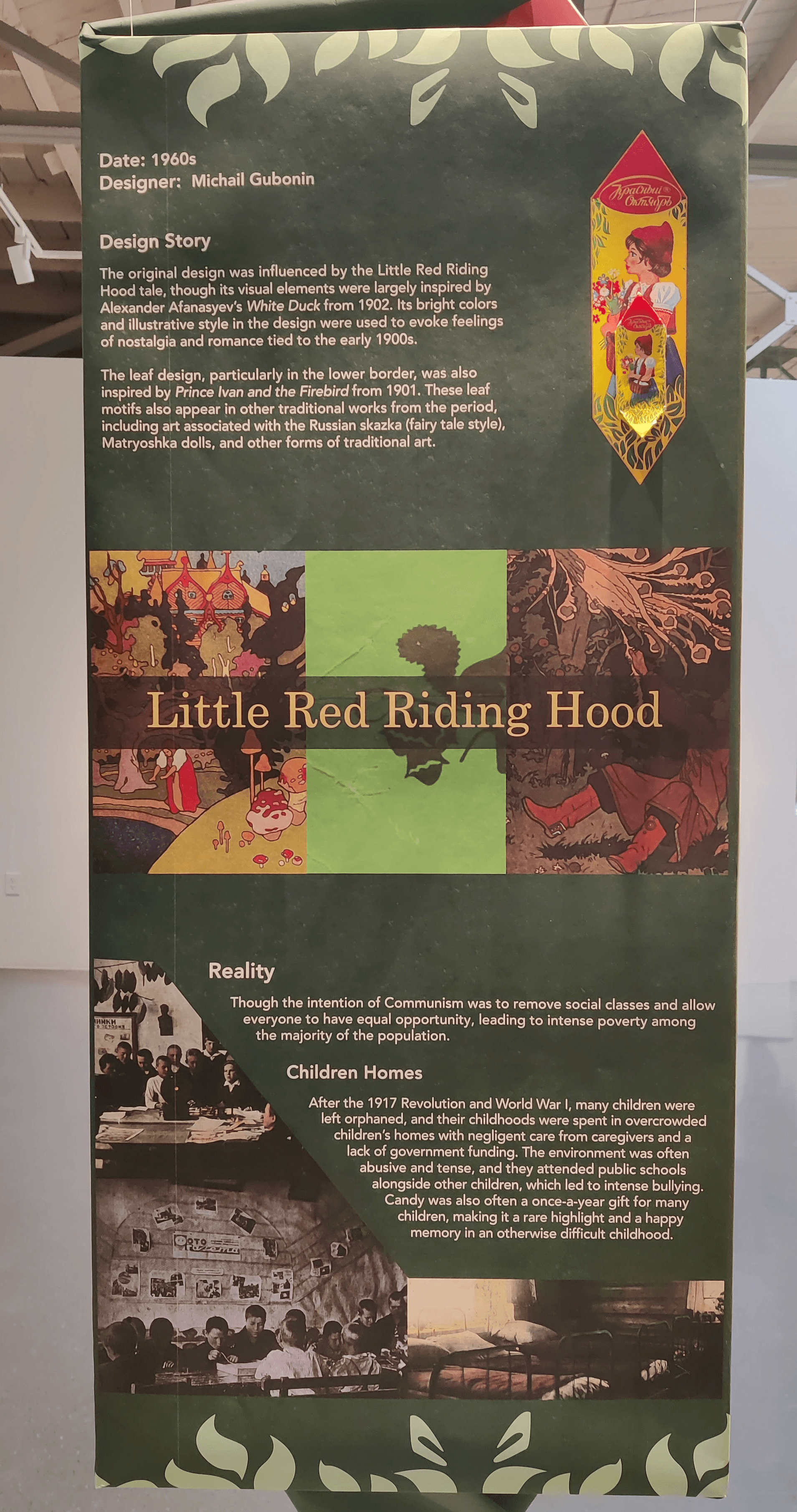
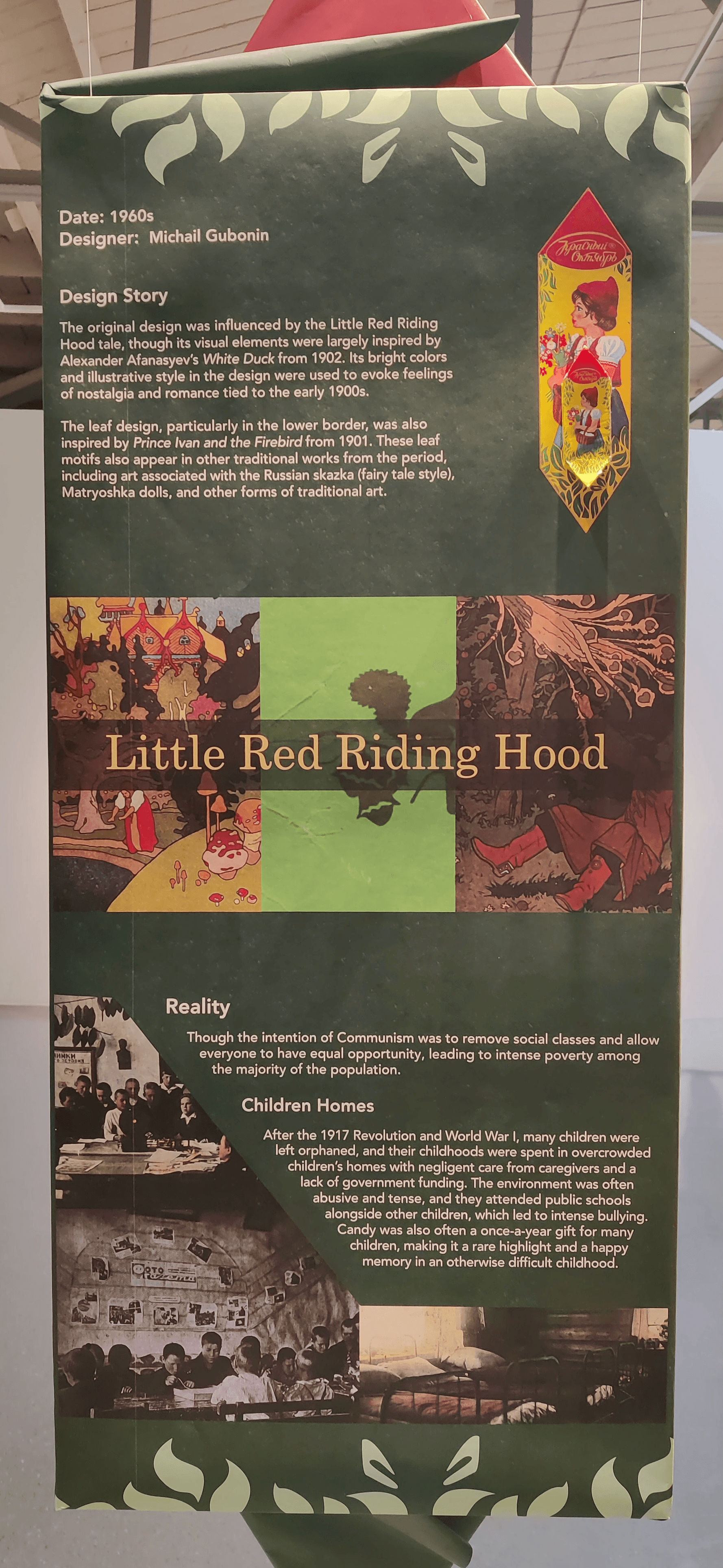
The original design was influenced by the Little Red Riding Hood tale, though its visual elements were largely inspired by Alexander Afanasyev’s White Duck from 1902. Its bright colors and illustrative style in the design were used to evoke feelings of nostalgia and romance tied to the early 1900s. The leaf design, particularly in the lower border, was also inspired by Prince Ivan and the Firebird from 1901. These leaf motifs also appear in other traditional works from the period, including art associated with the Russian skazka (fairy tale style), Matryoshka dolls, and other forms of traditional art.

Alenka
Political Influence
Alenka candy was a symbol of happy Soviet childhoods, and although the design did not hold an explicit political view, the existence of the candy was allowed by the soviet union, and the ideology was embedded in the design.

Clumsy Bear
Political Influence
The European Brown Bear is closely tied to Russian cultural identity and national pride, both of which are deeply rooted in patriotism. This connection begins forming at an early age, presenting it through candy becomes a subtle and everyday way to normalize that messaging.

Scale
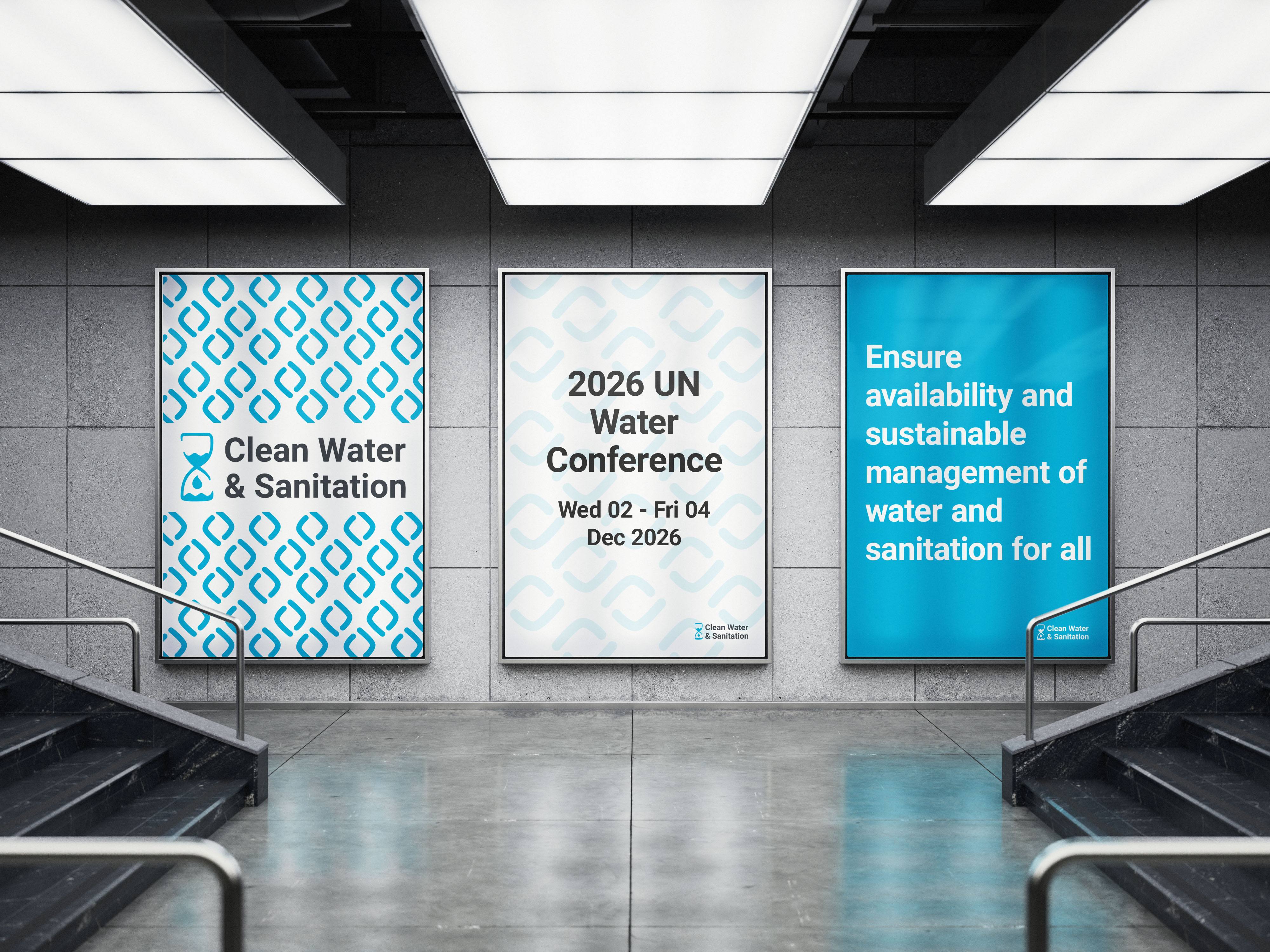
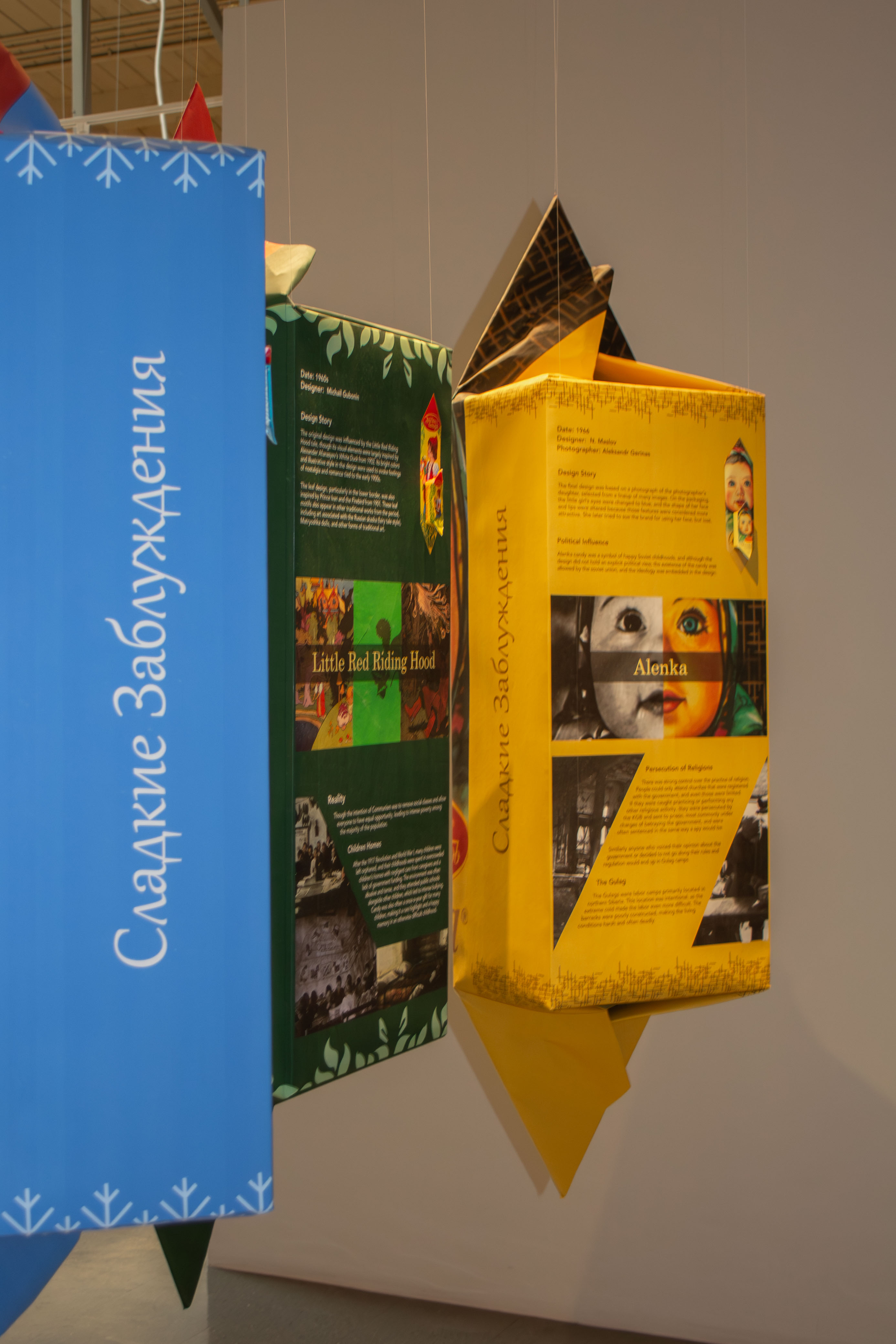
The display of enlarged candy with the actual candy attached to the back, is to show the scale and the influence on generations.
Sweet Delusions Zine
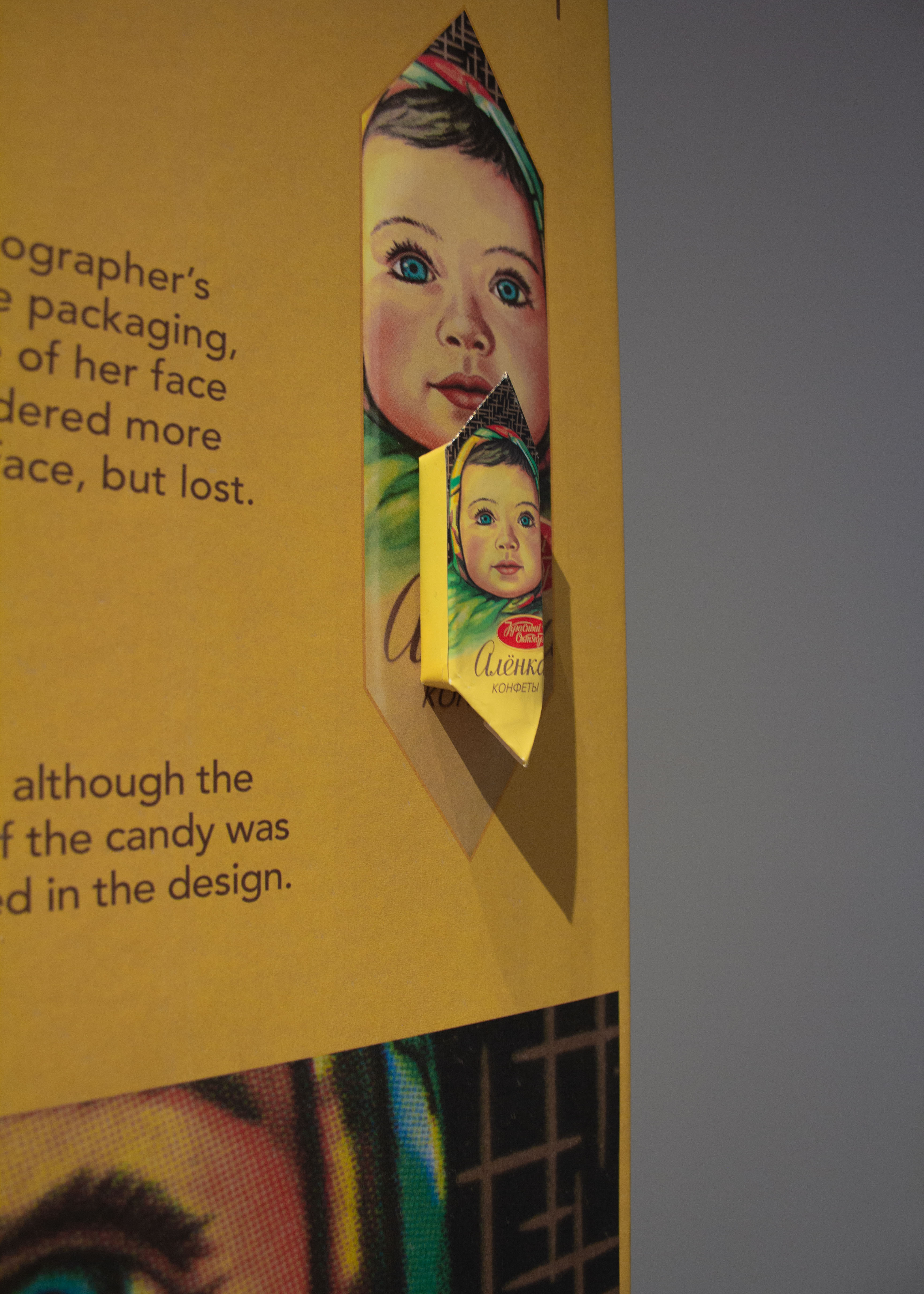
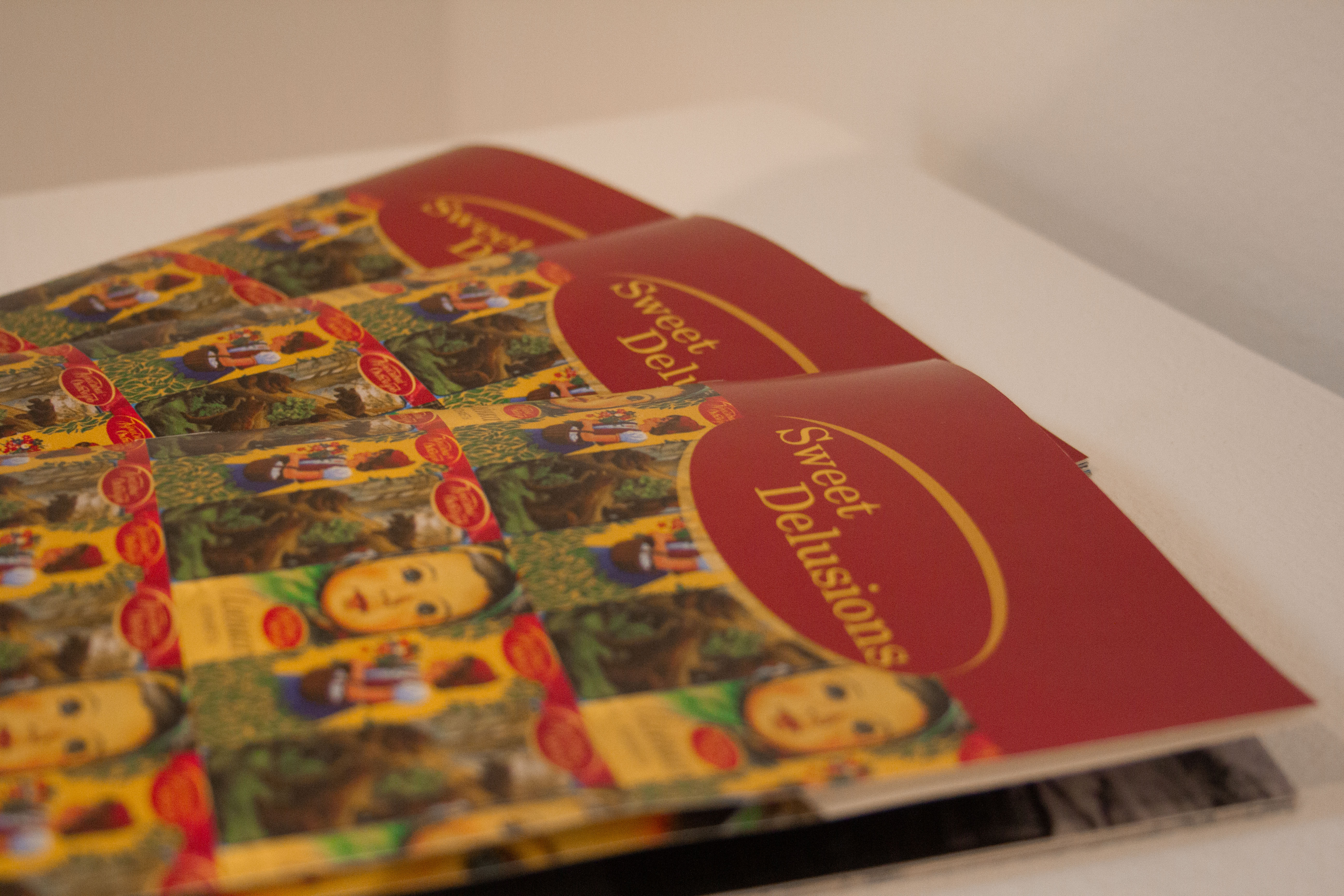
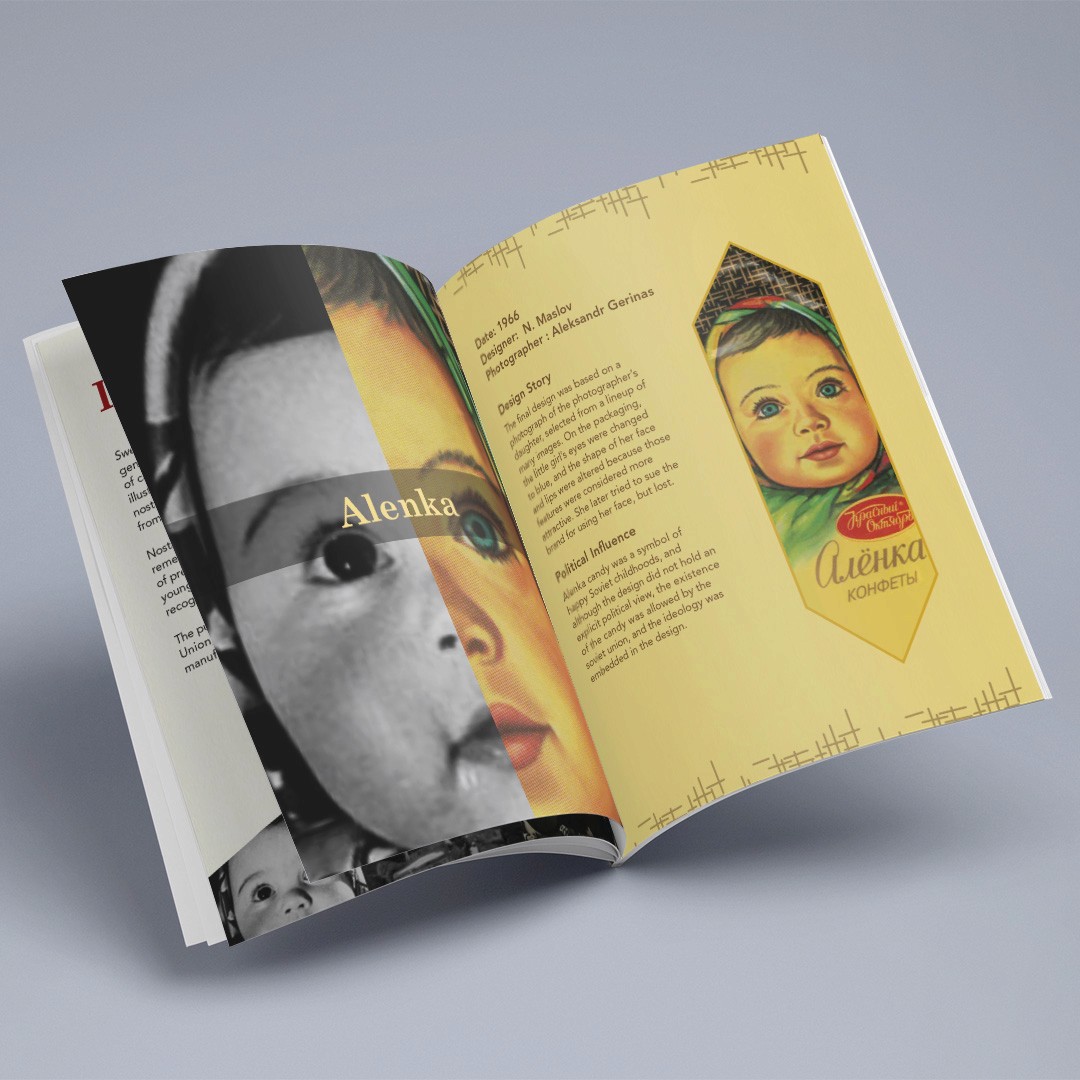
A zine was created to provide the viewer a secondary option for viewing the content as well as providing additional information.
More Projects
UN Sustainable Goal
Project Type
Branding System
Year
2026
Clean Water and Sanitation is the sixth United Nations Sustainable Development Goal and is part of the broader initiative to create a more sustainable and equitable future. This specific goal focuses on providing access to clean water and sanitation in regions where these basic resources are still lacking a crisis that continues to impact millions of people worldwide.
While the United Nations has an overarching logo system and each goal has its own symbolic icon, the existing visual framework has limited flexibility for broader application. The challenge of this project was to develop a logo and visual system that could extend beyond a single symbol and function cohesively across various real-world applications.
UN Sustainable Goal
Project Type
Branding System
Year
2026
Clean Water and Sanitation is the sixth United Nations Sustainable Development Goal and is part of the broader initiative to create a more sustainable and equitable future. This specific goal focuses on providing access to clean water and sanitation in regions where these basic resources are still lacking a crisis that continues to impact millions of people worldwide.
While the United Nations has an overarching logo system and each goal has its own symbolic icon, the existing visual framework has limited flexibility for broader application. The challenge of this project was to develop a logo and visual system that could extend beyond a single symbol and function cohesively across various real-world applications.
Alenka
Design Story
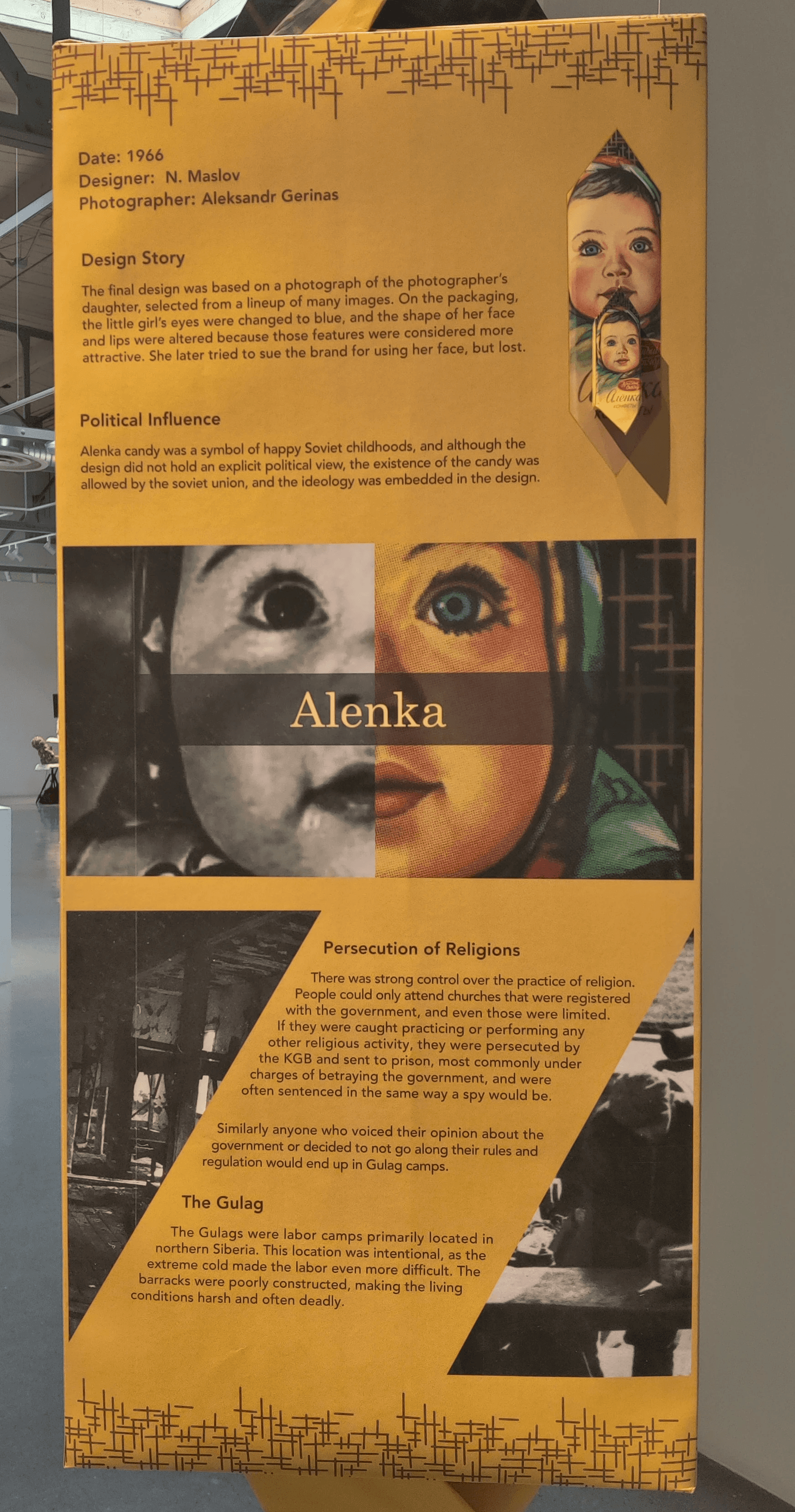
The final design was based on a photograph of the photographer’s daughter, selected from a lineup of many images. On the packaging, the little girl’s eyes were changed to blue, and the shape of her face and lips were altered because those features were considered more attractive. She later tried to sue the brand for using her face, but lost.
Political Influence
Alenka candy was a symbol of happy Soviet childhoods, and although the design did not hold an explicit political view, the existence of the candy was allowed by the soviet union, and the ideology was embedded in the design.
Design Story
The final design was based on a photograph of the photographer’s daughter, selected from a lineup of many images. On the packaging, the little girl’s eyes were changed to blue, and the shape of her face and lips were altered because those features were considered more attractive. She later tried to sue the brand for using her face, but lost.
Political Influence
Alenka candy was a symbol of happy Soviet childhoods, and although the design did not hold an explicit political view, the existence of the candy was allowed by the soviet union, and the ideology was embedded in the design.

Little Red Ridding Hood
Design Story
The original design was influenced by the Little Red Riding Hood tale, though its visual elements were largely inspired by Alexander
Afanasyev’s White Duck from 1902. Its bright colors and illustrative style in the design were used to evoke feelings of nostalgia and romance
tied to the early 1900s.
The leaf design, particularly in the lower border, was also inspired by Prince Ivan and the Firebird from 1901. These leaf motifs also appear in other traditional works from the period, including art associated with the Russian skazka (fairy tale style), Matryoshka dolls, and other forms of traditional art.
Design Story
The original design was influenced by the Little Red Riding Hood tale, though its visual elements were largely inspired by Alexander Afanasyev’s White Duck from 1902. Its bright colors and illustrative style in the design were used to evoke feelings of nostalgia and romance tied to the early 1900s. The leaf design, particularly in the lower border, was also inspired by Prince Ivan and the Firebird from 1901. These leaf motifs also appear in other traditional works from the period, including art associated with the Russian skazka (fairy tale style), Matryoshka dolls, and other forms of traditional art.
Clumsy Bear
Design Story
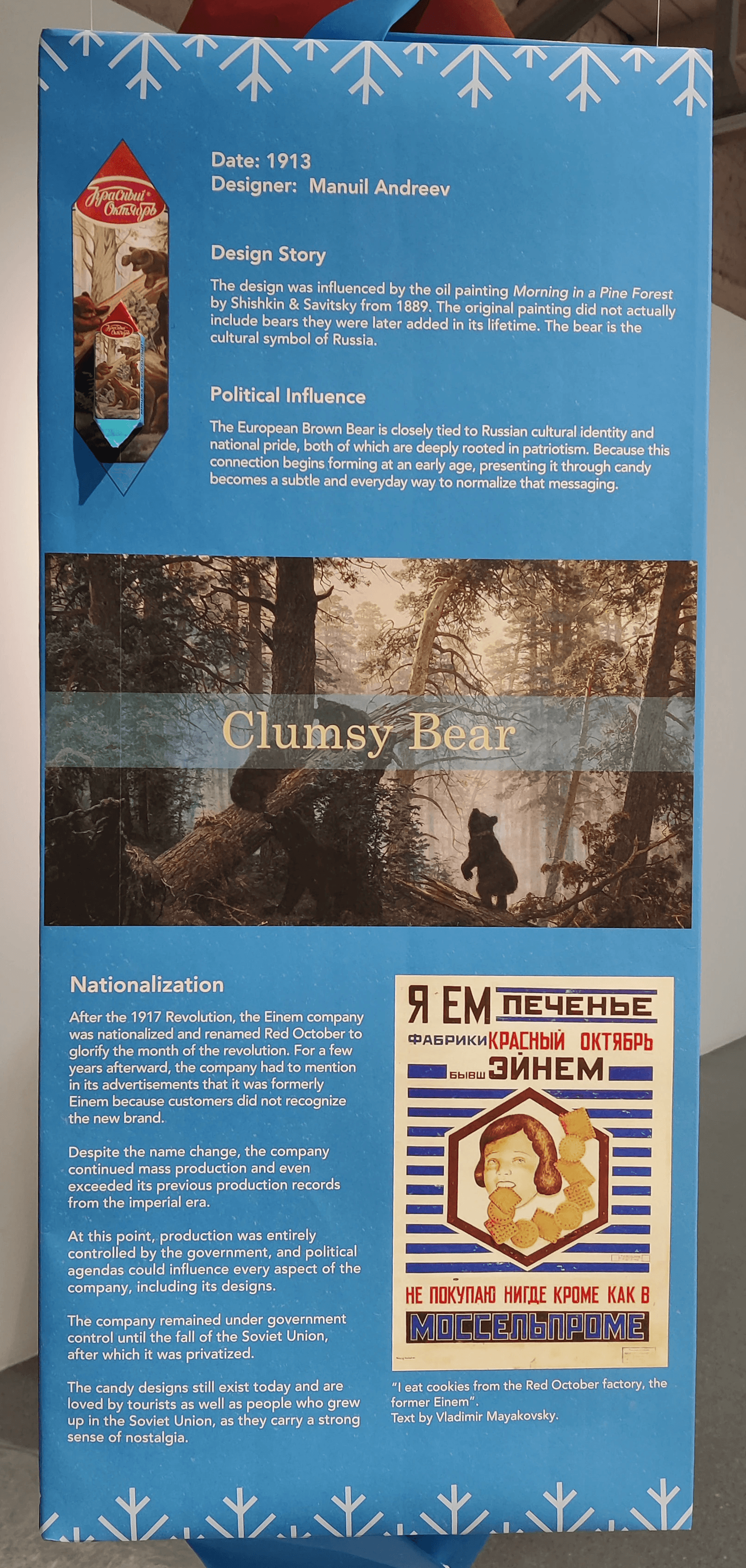
The design was influenced by the oil painting Morning in a Pine Forest by Shishkin & Savitsky from 1889. The original painting did not actually include bears they were later added in its lifetime. The bear is the cultural symbol of Russia.
Political Influence
The European Brown Bear is closely tied to Russian cultural identity and national pride, both of which are deeply rooted in patriotism. This connection begins forming at an early age, presenting it through candy becomes a subtle and everyday way to normalize that messaging.
Design Story
The design was influenced by the oil painting Morning in a Pine Forest by Shishkin & Savitsky from 1889. The original painting did not actually include bears they were later added in its lifetime. The bear is the cultural symbol of Russia.
Political Influence
The European Brown Bear is closely tied to Russian cultural identity and national pride, both of which are deeply rooted in patriotism. Because this connection begins forming at an early age, presenting it through candy becomes a subtle and everyday way to normalize that messaging.

Scale
The display of enlarged candy with the actual candy attached to the back, is to show the scale and the influence on generations.
Sweet Delusions Zine
A zine was created to provide the viewer a secondary option for viewing the content as well as providing additional information.
Placement
The candy was placed in a semi-circle to viewers to be able to walk around the piece and feel the scale of the experience even if they personally can't connect to it.
Placement
The candy was placed in a semi-circle to viewers to be able to walk around the piece and feel the scale of the experience even if they personally can't connect to it.
More Projects