Sweet Delusions
Project Type
Senior Thesis
Year
2026
Sweet Delusions examines how political control shaped nostalgia among generations of Russians during the Soviet era, influencing the design of candy wrappers that distorted the realities of everyday life. The bright and colorful illustrations draw from late 1800s folk culture but were designed to evoke nostalgia for a pre-Soviet past that had long since disappeared, distracting from the harsh realities of communist control.
Nostalgia is a powerful tool that can distort and trick a population into remembering a version of life that is neither fully accurate nor reflective of present reality. When applied to candy, a product often consumed by young children who are more vulnerable to influence, that attraction and recognition can begin at an early age.
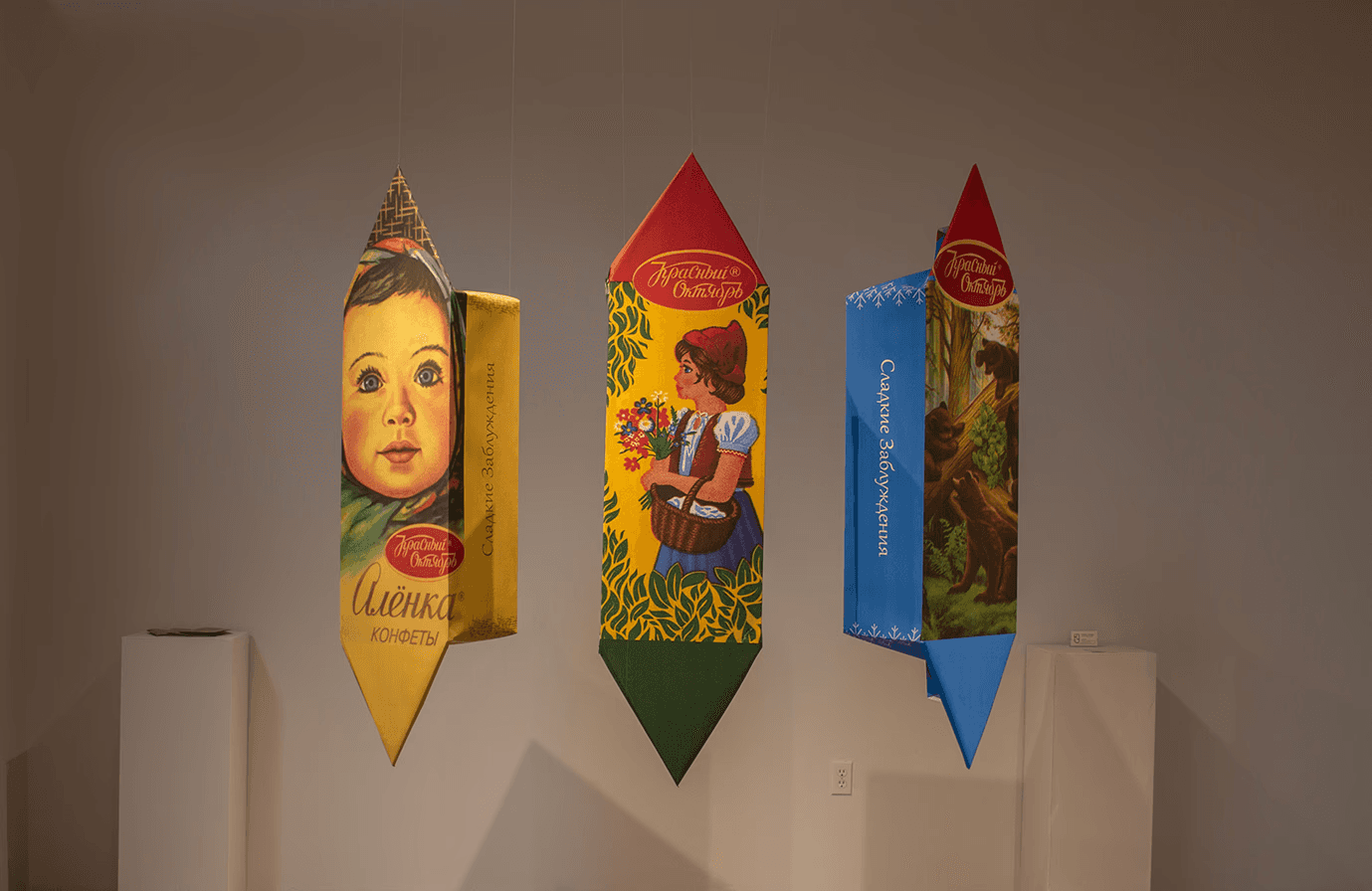
In the early 1900s, after the Imperial family was assassinated, a communist, authoritarian government took control, nationalized industry, and centralized production and distribution, shaping what people could access. Under Marxism-Leninism, the state’s ideology extended into everyday life, shaping the imagery and design of mass-produced goods as a part of a larger message about identity and belonging. Under the Soviet Government, The Red October brand had full control over what was produced, and the visual clues in illustration type, beauty standards, and national branding reflect this. The purpose of Sweet Delusions is to expose the reality of life in the Soviet Union, the Communist Party's repression, and how it pushed a manufactured narrative of happiness through nostalgic imagery through the display of three enlarged candy bars.
Little Red Ridding Hood
Design Story
The original design was influenced by the Little Red Riding Hood tale, though its visual elements were largely inspired by Alexander Afanasyev’s White Duck from 1902. Its bright colors and illustrative style in the design were used to evoke feelings of nostalgia and romance tied to the early 1900s. The leaf design, particularly in the lower border, was also inspired by Prince Ivan and the Firebird from 1901. These leaf motifs also appear in other traditional works from the period, including art associated with the Russian skazka (fairy tale style), Matryoshka dolls, and other forms of traditional art.

Alenka
Political Influence
Alenka candy was a symbol of happy Soviet childhoods, and although the design did not hold an explicit political view, the existence of the candy was allowed by the soviet union, and the ideology was embedded in the design.

Clumsy Bear
Political Influence
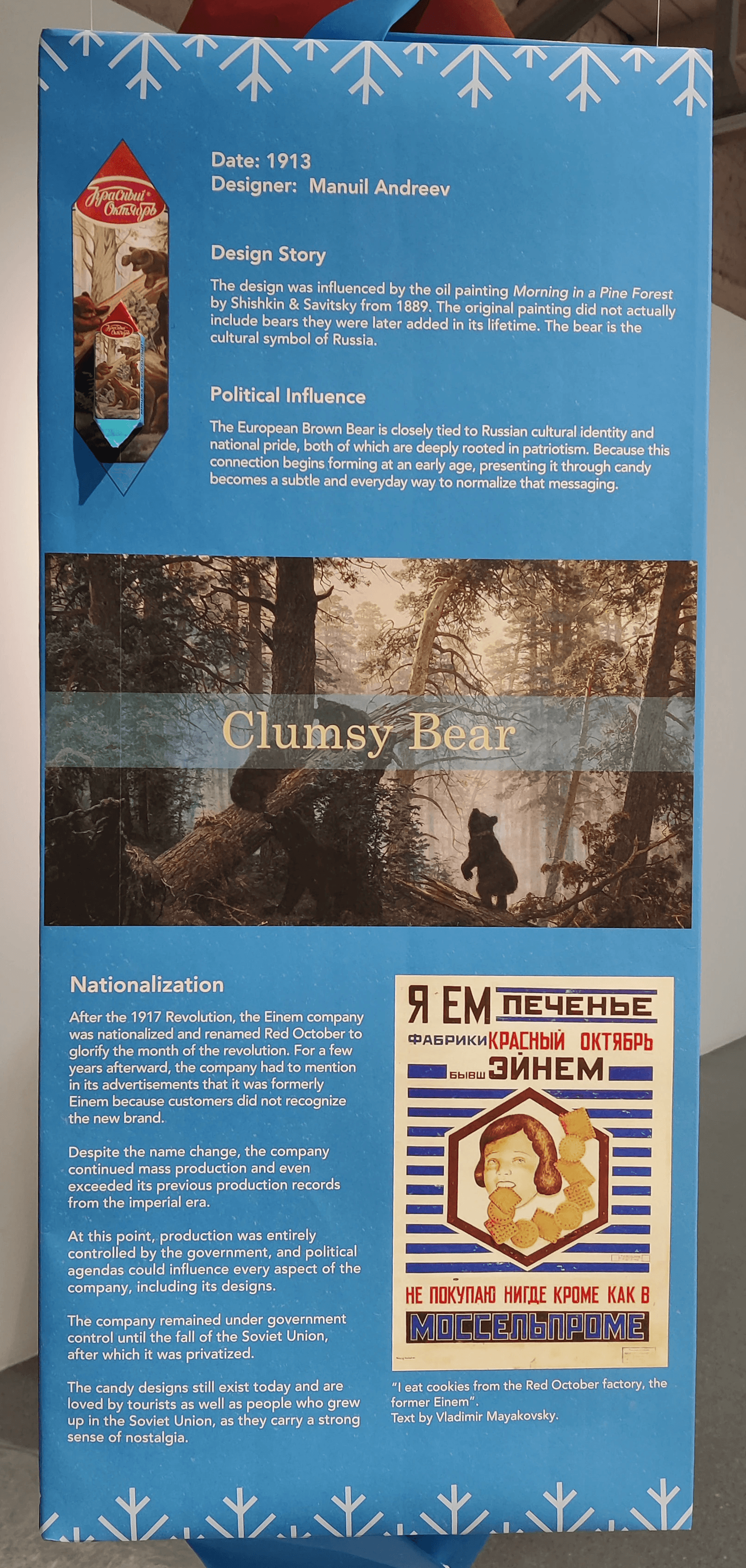
The European Brown Bear is closely tied to Russian cultural identity and national pride, both of which are deeply rooted in patriotism. This connection begins forming at an early age, presenting it through candy becomes a subtle and everyday way to normalize that messaging.

Scale
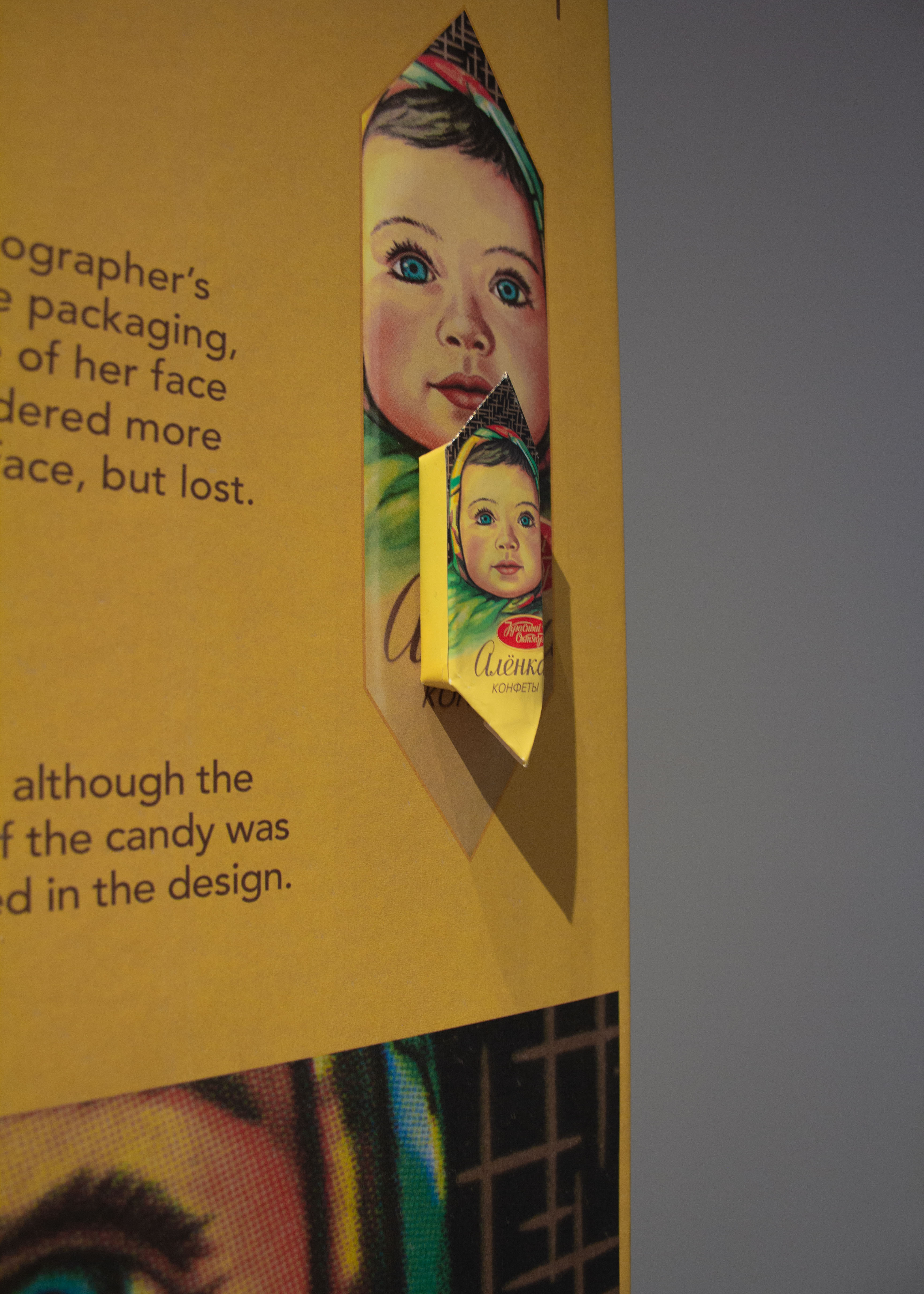
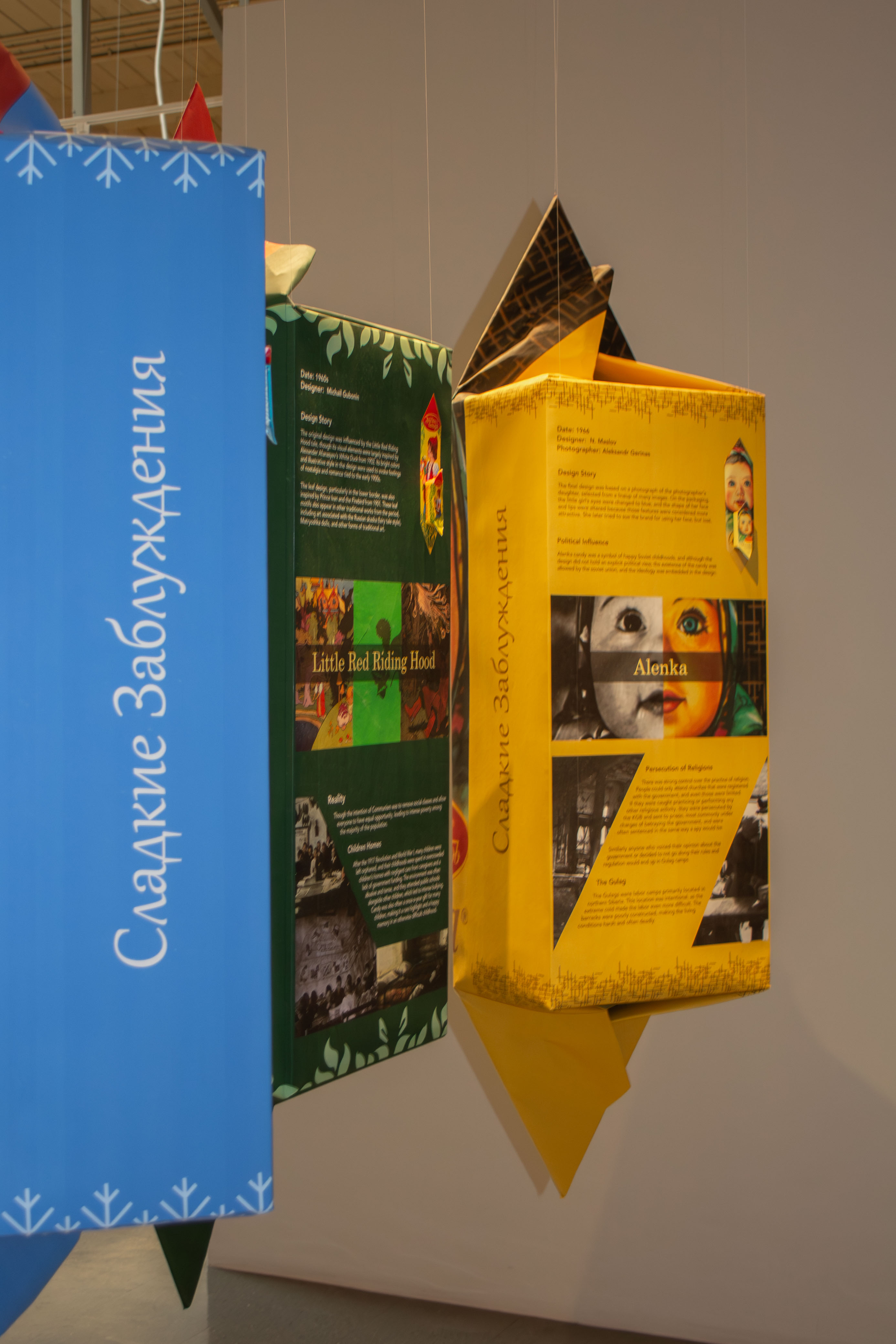
The display of enlarged candy with the actual candy attached to the back, is to show the scale and the influence on generations.
Sweet Delusions Zine
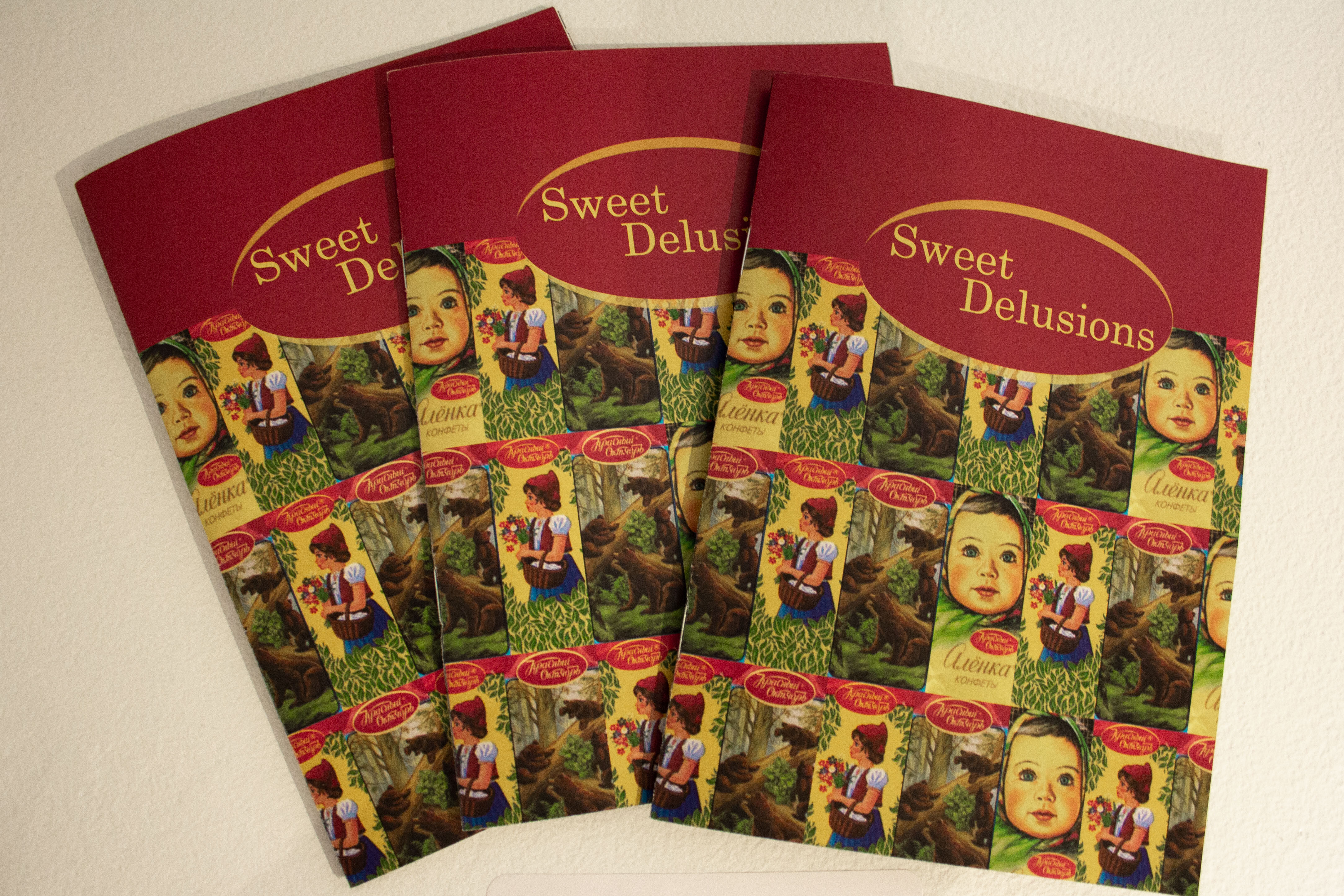
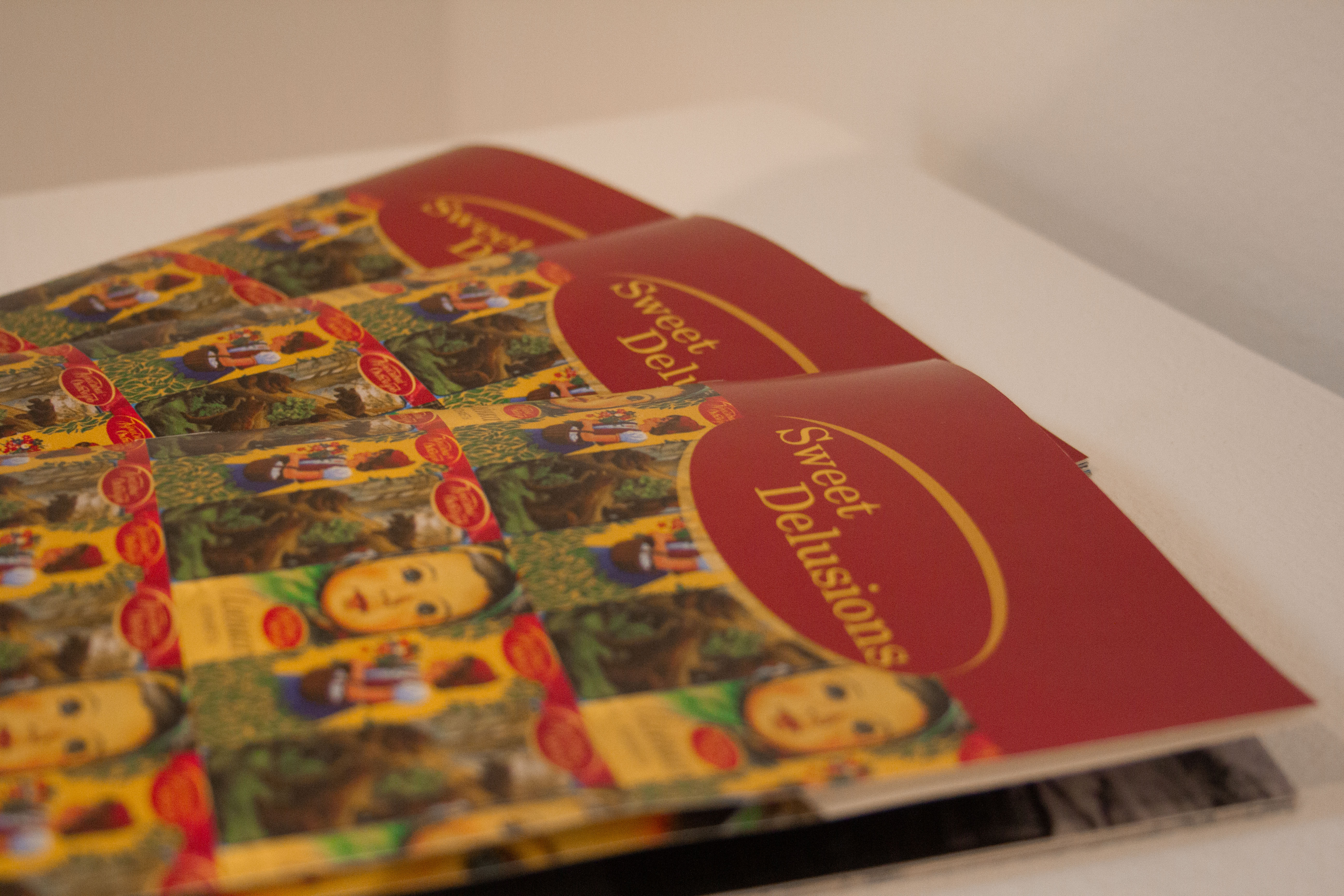
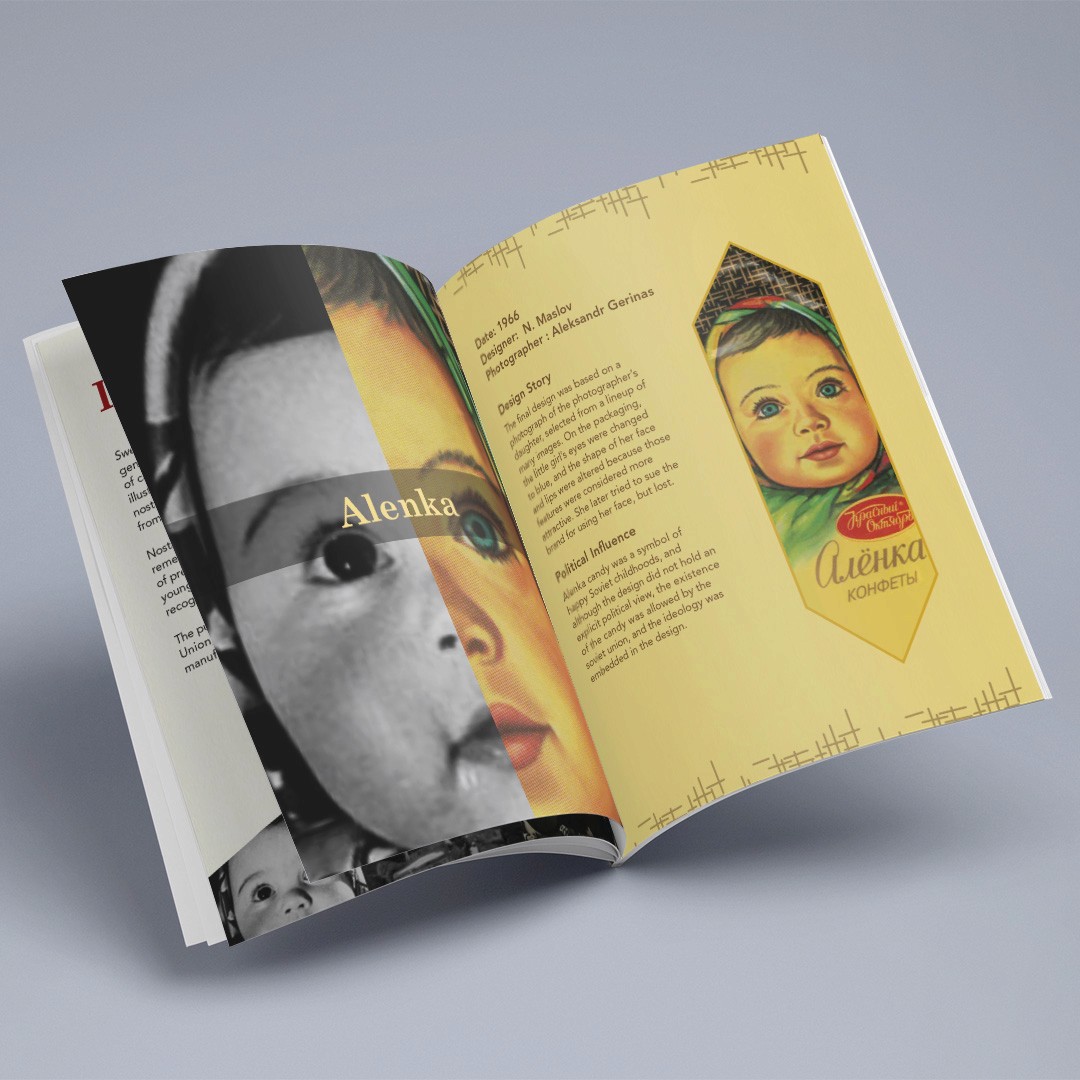
A zine was created to provide the viewer a secondary option for viewing the content as well as providing additional information.
More Projects
Sweet Delusions
Project Type
Senior Thesis
Year
2026
Sweet Delusions examines how political control shaped nostalgia among generations of Russians during the Soviet era, influencing the design of candy wrappers that distorted the realities of everyday life. The bright and colorful illustrations draw from late 1800s folk culture but were designed to evoke nostalgia for a pre-Soviet past that had long since disappeared, distracting from the harsh realities of communist control.
Nostalgia is a powerful tool that can distort and trick a population into remembering a version of life that is neither fully accurate nor reflective of present reality. When applied to candy, a product often consumed by young children who are more vulnerable to influence, that attraction and recognition can begin at an early age.
In the early 1900s, after the Imperial family was assassinated, a communist, authoritarian government took control, nationalized industry, and centralized production and distribution, shaping what people could access. Under Marxism-Leninism, the state’s ideology extended into everyday life, shaping the imagery and design of mass-produced goods as a part of a larger message about identity and belonging. Under the Soviet Government, The Red October brand had full control over what was produced, and the visual clues in illustration type, beauty standards, and national branding reflect this. The purpose of Sweet Delusions is to expose the reality of life in the Soviet Union, the Communist Party's repression, and how it pushed a manufactured narrative of happiness through nostalgic imagery through the display of three enlarged candy bars.
Sweet Delusions
Project Type
Senior Thesis
Year
2026
Sweet Delusions examines how political control shaped nostalgia among generations of Russians during the Soviet era, influencing the design of candy wrappers that distorted the realities of everyday life. The bright and colorful illustrations draw from late 1800s folk culture but were designed to evoke nostalgia for a pre-Soviet past that had long since disappeared, distracting from the harsh realities of communist control.
Nostalgia is a powerful tool that can distort and trick a population into remembering a version of life that is neither fully accurate nor reflective of present reality. When applied to candy, a product often consumed by young children who are more vulnerable to influence, that attraction and recognition can begin at an early age.
In the early 1900s, after the Imperial family was assassinated, a communist, authoritarian government took control, nationalized industry, and centralized production and distribution, shaping what people could access. Under Marxism-Leninism, the state’s ideology extended into everyday life, shaping the imagery and design of mass-produced goods as a part of a larger message about identity and belonging. Under the Soviet Government, The Red October brand had full control over what was produced, and the visual clues in illustration type, beauty standards, and national branding reflect this. The purpose of Sweet Delusions is to expose the reality of life in the Soviet Union, the Communist Party's repression, and how it pushed a manufactured narrative of happiness through nostalgic imagery through the display of three enlarged candy bars.
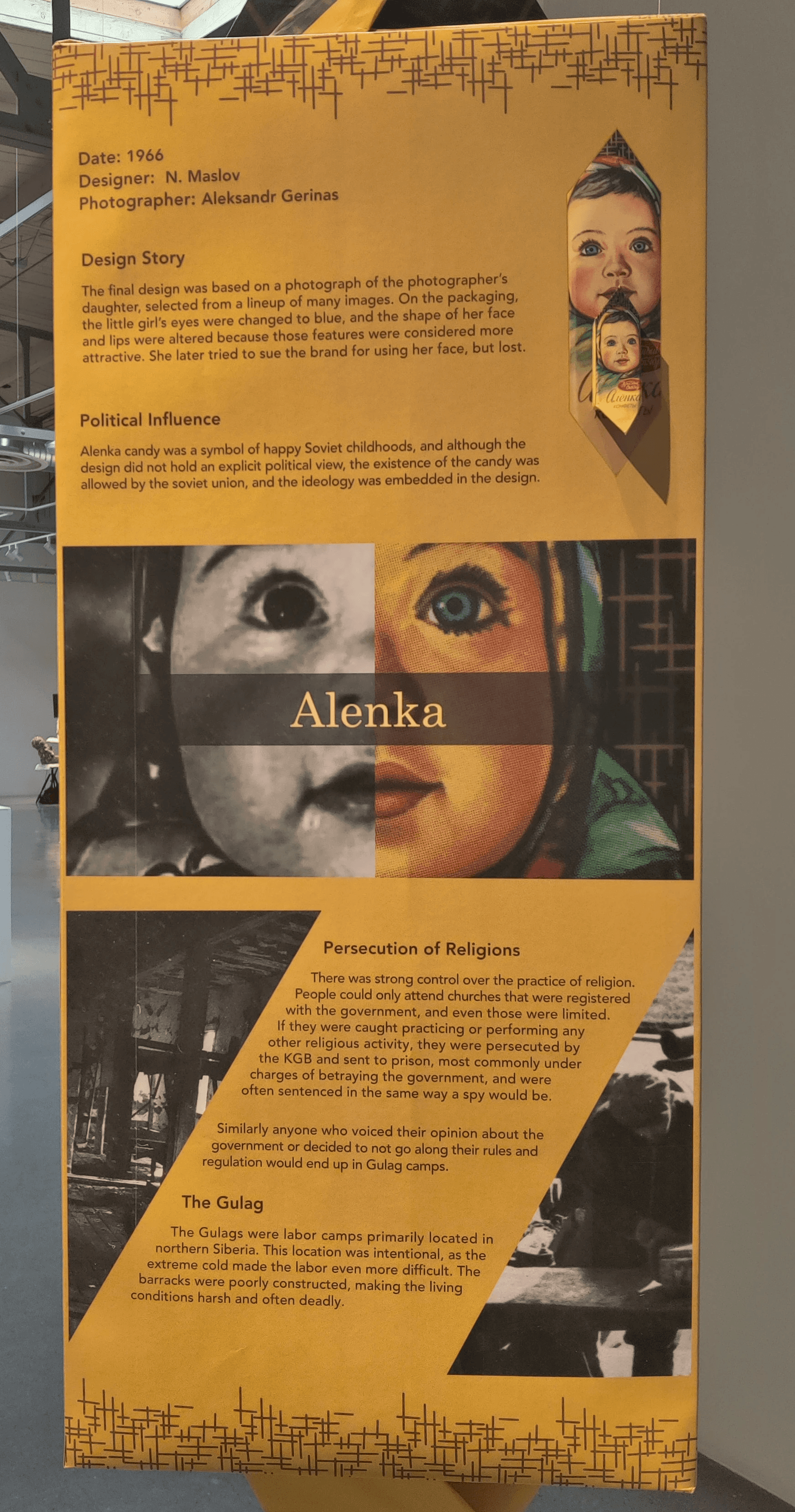
Alenka
Design Story
The final design was based on a photograph of the photographer’s daughter, selected from a lineup of many images. On the packaging, the little girl’s eyes were changed to blue, and the shape of her face and lips were altered because those features were considered more attractive. She later tried to sue the brand for using her face, but lost.
Political Influence
Alenka candy was a symbol of happy Soviet childhoods, and although the design did not hold an explicit political view, the existence of the candy was allowed by the soviet union, and the ideology was embedded in the design.
Design Story
The final design was based on a photograph of the photographer’s daughter, selected from a lineup of many images. On the packaging, the little girl’s eyes were changed to blue, and the shape of her face and lips were altered because those features were considered more attractive. She later tried to sue the brand for using her face, but lost.
Political Influence
Alenka candy was a symbol of happy Soviet childhoods, and although the design did not hold an explicit political view, the existence of the candy was allowed by the soviet union, and the ideology was embedded in the design.

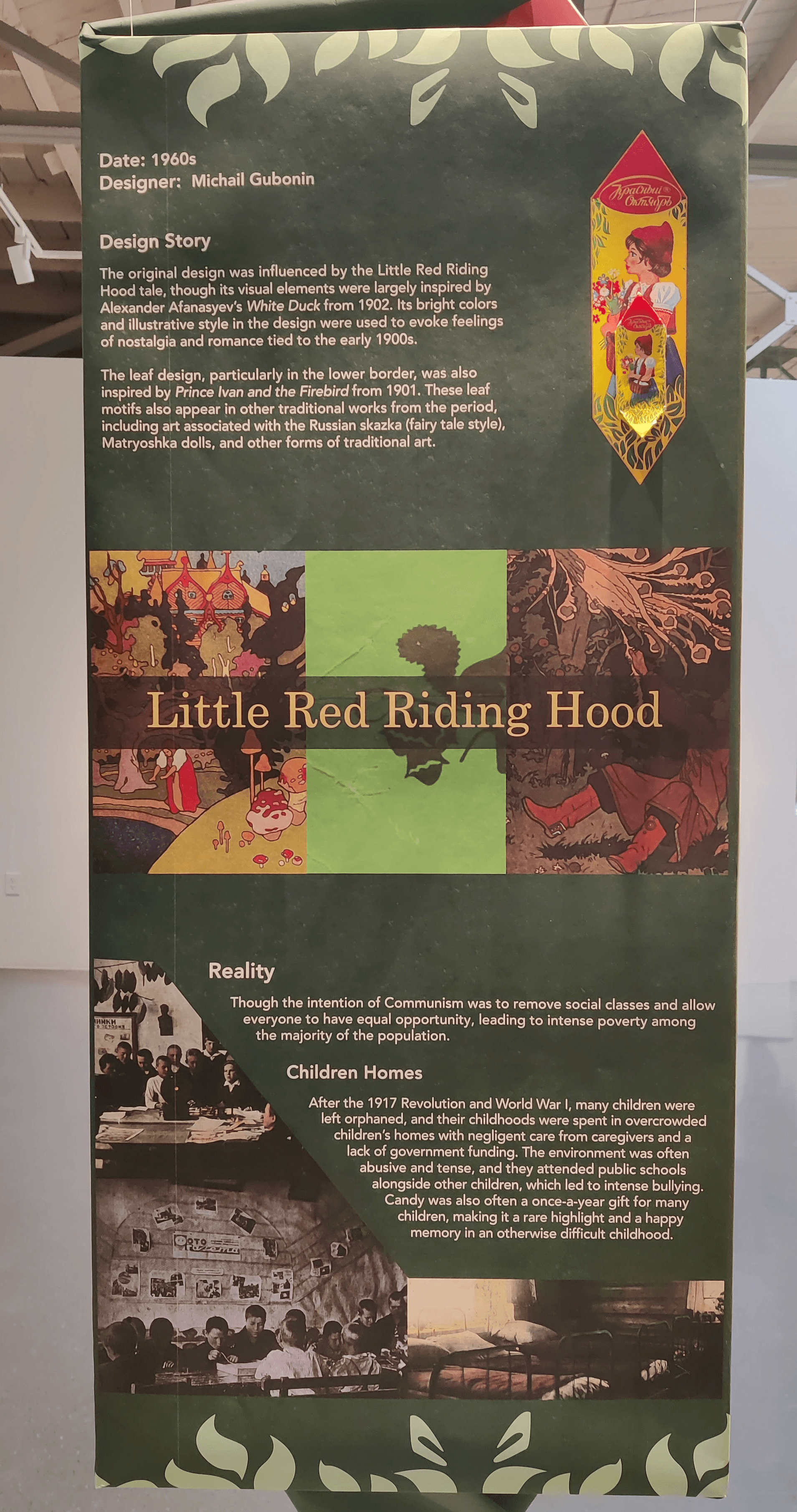
Little Red Ridding Hood
Design Story
The original design was influenced by the Little Red Riding Hood tale, though its visual elements were largely inspired by Alexander
Afanasyev’s White Duck from 1902. Its bright colors and illustrative style in the design were used to evoke feelings of nostalgia and romance
tied to the early 1900s.
The leaf design, particularly in the lower border, was also inspired by Prince Ivan and the Firebird from 1901. These leaf motifs also appear in other traditional works from the period, including art associated with the Russian skazka (fairy tale style), Matryoshka dolls, and other forms of traditional art.
Design Story
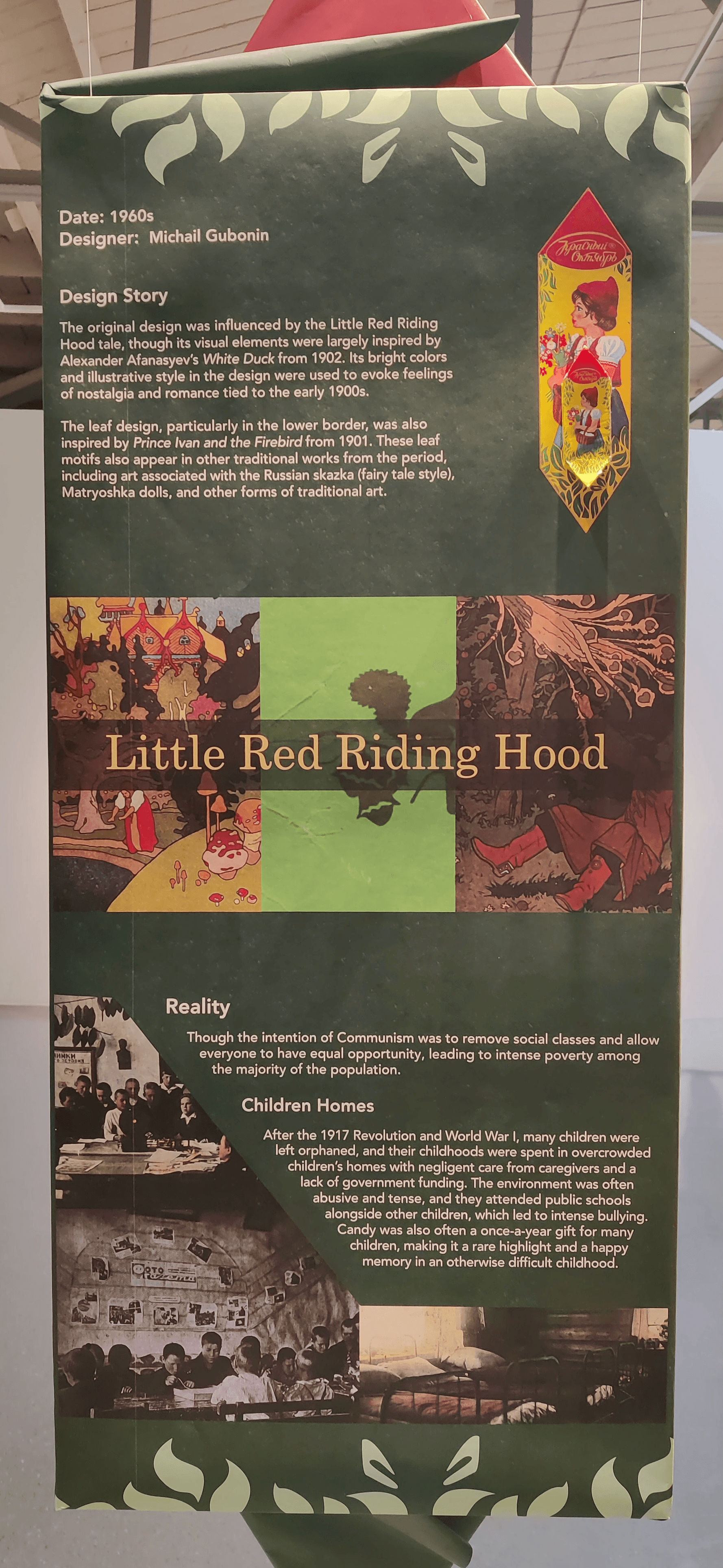
The original design was influenced by the Little Red Riding Hood tale, though its visual elements were largely inspired by Alexander Afanasyev’s White Duck from 1902. Its bright colors and illustrative style in the design were used to evoke feelings of nostalgia and romance tied to the early 1900s. The leaf design, particularly in the lower border, was also inspired by Prince Ivan and the Firebird from 1901. These leaf motifs also appear in other traditional works from the period, including art associated with the Russian skazka (fairy tale style), Matryoshka dolls, and other forms of traditional art.
Clumsy Bear
Design Story
The design was influenced by the oil painting Morning in a Pine Forest by Shishkin & Savitsky from 1889. The original painting did not actually include bears they were later added in its lifetime. The bear is the cultural symbol of Russia.
Political Influence
The European Brown Bear is closely tied to Russian cultural identity and national pride, both of which are deeply rooted in patriotism. This connection begins forming at an early age, presenting it through candy becomes a subtle and everyday way to normalize that messaging.
Design Story
The design was influenced by the oil painting Morning in a Pine Forest by Shishkin & Savitsky from 1889. The original painting did not actually include bears they were later added in its lifetime. The bear is the cultural symbol of Russia.
Political Influence
The European Brown Bear is closely tied to Russian cultural identity and national pride, both of which are deeply rooted in patriotism. Because this connection begins forming at an early age, presenting it through candy becomes a subtle and everyday way to normalize that messaging.

Scale
The display of enlarged candy with the actual candy attached to the back, is to show the scale and the influence on generations.
Sweet Delusions Zine
A zine was created to provide the viewer a secondary option for viewing the content as well as providing additional information.
Placement
The candy was placed in a semi-circle to viewers to be able to walk around the piece and feel the scale of the experience even if they personally can't connect to it.
Placement
The candy was placed in a semi-circle to viewers to be able to walk around the piece and feel the scale of the experience even if they personally can't connect to it.
More Projects